
1. Make the brief testable
Add a note with three decisions: the workshop is small, its timber frame is exposed, and low afternoon light should separate it from the background. Add one constraint, such as a single main entrance visible from the intended camera.
Write what is still unknown. For example: is the roof a single slope or a shallow gable? An unanswered question belongs on the board because it tells you what evidence to gather next.
2. Collect by purpose
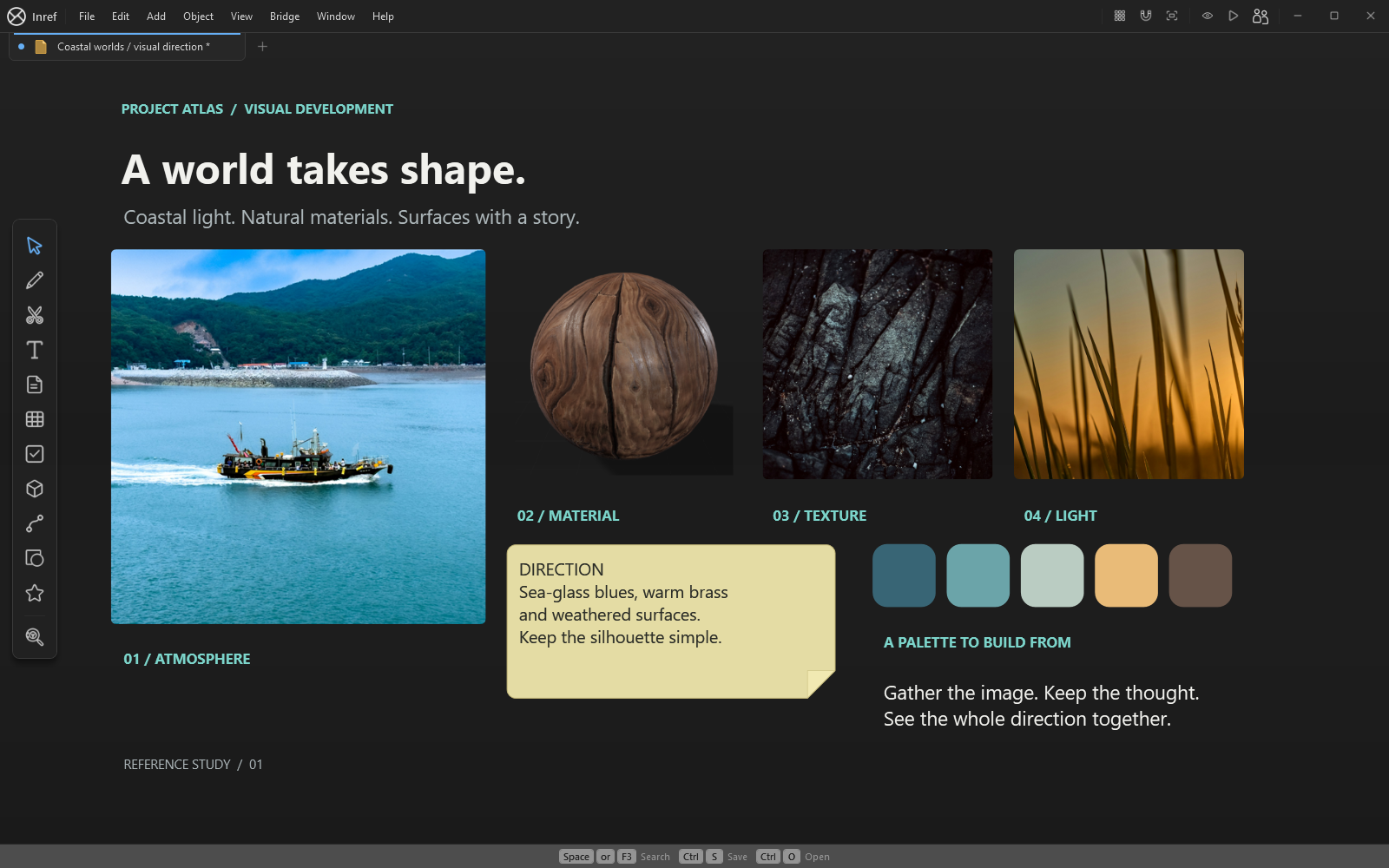
Create groups for silhouette, construction, materials and lighting. Begin with a few references per group and annotate their purpose. Keep the source URL or credit with each image; being able to view an image online does not grant permission to redistribute it.
- Drag your selected image files onto the canvas, or paste an image from the clipboard.
- Arrange the silhouette references together and label the roof shapes worth testing.
- Separate joinery and structural details from surface weathering.
- Keep one lighting reference close to the brief so it guides the whole scene.
3. Turn research into a blockout checklist
Add three notes: test the roof profile, check the entrance against a human scale reference, and separate the main masses with light. Keep these beside the relevant reference group. A long collection becomes useful when it leads to a short list of decisions.
Bring in a screenshot of your blockout and compare large shapes before adding detail. If the roof shape is unclear at thumbnail size, another texture reference will not resolve that problem.
4. Record a reviewable direction
Move selected references into an approved group and keep alternates elsewhere. Add a note explaining why the direction changed. Save the editable .inref board, then export a PNG for a review using File > Export with nothing selected.
For a repeatable brief, start from the project-kickoff template. Its prompts help record the outcome, audience and scope. Its table is included with Inref, alongside the images and notes used in the reference-gathering exercise.